Showing posts with label Blog. Show all posts

Who are the richest football club owners in the world?

Top 10 richest football club owners in the world

1) Sheikh  Mansour| Man City, Melbourne City, New York City | $20bn

Sheikh Mansour
Mansour bin Zayed Al Nahyan, also known as Sheikh Mansour, is best known in a football context for his ownership of Premier League club Manchester City, but he also owns a number of other clubs through the City Football Group.
As well as Man City, Major League Soccer side New York City and A-League outfit Melbourne City are among the clubs in the City Football Group owned by Sheikh Mansour. Others include Mumbai City in India and the Uruguayan team Montevideo City Torque.

2) Dietrich Mateschitz | Red Bull Salzburg, RB Leipzig, NY Red Bulls | $19.4bn

Dietrich Mateschitz
Austrian billionaire Dietrich Mateschitz has compiled an extensive portfolio of teams across a variety of sports, most of which have the name of his company emblazoned on them.
In football, his main concerns are Bundesliga side RB Leipzig, Austrian club Red Bull Salzburg and MLS side New York Red Bulls.

3) Andrea Agnelli & family | Juventus | $13.5bn

Andrea Agnelli
The Agnelli family are the owners of Juventus, with Andrea Agnelli being the face of the family's football enterprise, serving as chairman of both the club and of the European Club Association (ECA).
Known as an industrialist family, the Agnelli family's business interests are varied, but they are mostly synonymous with the motor car industry, producing Fiat, Ferrari, Alfa Romeo and other such brands.

4) Dietmar Hopp | Hoffenheim | $13bn

Dietmar Hopp
Bundesliga side Hoffenheim may not be global players, but their owner Dietmar Hopp is an influential businessman in the software and data processing sector having helped to found SAP SE.
Hopp, who is reported to have invested nearly €400 million into Hoffenheim, is heavily criticised by football fans in Germany, but was notably to the fore in the search for a coronavirus vaccine in 2020.

5) Roman Abramovic | Chelsea | $12.4bn

Roman Abramovic
Russian businessman Roman Abramovic caused quite a stir in 2003 when he injected millions into Premier League club Chelsea to help propel them along the path to success in England and Europe.
He made his money in the oil industry, but has also invested in aluminium concerns among others.

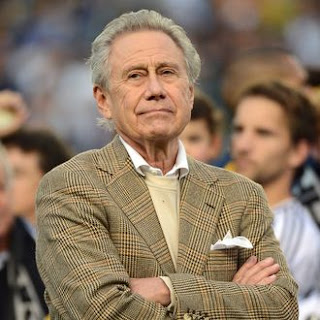
6) Philip Anschutz | LA Galaxy | $10bn

Philip Anschutz
A founding member of Major League Soccer, Philip Anschutz owns the popular team LA Galaxy, but in the past also owned a number of other franchises in the league, including MetroStars, Chicago Fire and others.
The American billionaire's main business interests are in the real estate, oil, rail and entertainment industries.

7) Stan Kroenke | Arsenal, Colorado Rapids | $9bn

Stan Kroenke
Premier League club Arsenal are owned by American billionaire Stan Kroenke, through his Kroenke Sports and Entertainment company. 
Kroenke's company also owns MLS side Colorado Rapids, as well as a number of teams in other sports, including the Los Angeles Rams in NFL, Denver Nuggets in the NBA and Colorado Avalanche in NHL.

8) Nasser Al-Khelaifi | PSG | $8bn

Nasser Al-Khelaifi
Qatari businessman Nasser Al-Khelaifi is the head of Qatar Sports Investments, which owns and operates French team Paris Saint-Germain.
Al-Khelaifi is also the chairman of the beIN Media group, which broadcasts a variety of sports, and he was the mastermind behind the world record €222 million (£198m/$263m) transfer of Neymar from Barcelona to PSG. 

9) Zhang Jindong | Inter | $7.6bn

Zhang Jindong
Zhang Jindong is a Chinese billionaire who, through his company the Suning Holdings Group, acquired a majority ownership stake in Serie A club Inter in 2016.
The Suning group is a retail business dealing in domestic appliances, but Jindong's other interests extend to the media and broadcasting sector, as well as sport.

10) Robert Kraft|New England Revolution|$6bn

Robert Kraft
Kraft Group CEO Robert Kraft is the owner of MLS side New England Revolution and also previously owned the San Jose Earthquakes. The American billionaire, whose business interests lie in sports, manufacturing and real estate, also owns the NFL team the New England Patriots.
Kraft was among those who considered making a bid to control Premier League side Liverpool in the mid-2000s and still finds England's top division an alluring investment prospect.

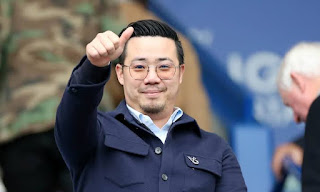
10) Aiyawatt Srivaddhanaprabha & family | Leicester City, OH Leuven |$6bn

Aiyawatt Srivaddhanaprabha
Thai businessman Aiyawatt Srivaddhanaprabha is the CEO of King Power and owner of Premier League club Leicester City. He is also the owner of Belgian team OH Leuven.
Srivaddhanaprabha took over the running of the business following the tragic death of his father Vichai in a helicopter crash in 2018. 

Best La Liga Signings of the 2019/20 Season

La Liga clubs splashed the cash in 2019/20, with the likes of Joao Felix, Eden Hazard and Antoine Griezmann among others all making big money moves.

But it's fair to say that that some of them haven't quite worked out...so far. 

Hazard has played 15 just games in all competitions for Real Madrid in 2019/20, and in this time, he has managed to find the net just once. However, there have also been a number of signings this term which have turned out to be excellent pieces of business. 

Kieran Trippier (Atletico Madrid) 

Kieran Trippier (Atletico Madrid)
Trippier's move to ​Atletico Madrid came as a shock, but he's settled very quickly to life in Madrid. Few expected the move to happen, and there were similar reservations about how much game time he'd actually get. However, he's shone, making the right back slot his own. The Englishman has also been a vital part of his side's attacking play, providing the width on the right to support those ahead of him. 

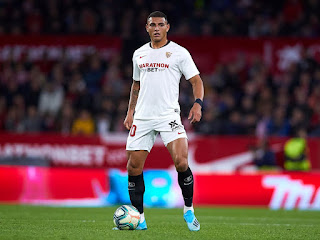
Diego Carlos (Sevilla)

Diego Carlos (Sevilla)
Carlos' stock has risen rapidly this season. Joining Sevilla from Nantes just last summer, Carlos' stellar displays at the back have already seen him linked with a big money move away. The 27-year-old has been key to improving Sevilla's defensive record this season, with his tough tackling and no-nonsense defending. Equally capable with the ball at his feet, Carlos has proven to be a very shrewd piece of business, but this could see ​Sevilla part ways with him when the transfer window opens as Europe's elite come calling. 

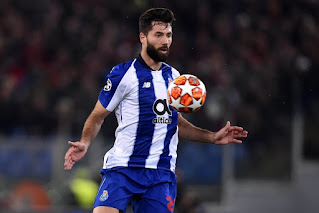
Felipe (Atletico Madrid) 

Felipe (Atletico Madrid)
It was always going to be near-impossible to replace Diego Godin at Atletico, but Felipe has proven to be a valuable addition. The 30-year-old's reading of the game and aerial presence has allowed him to take control and marshal his backline in his first season with the club. Felipe's performances have helped Atletico and Diego Simeone maintain their status as the division's finest defensive unit, with Los Rojiblancos conceding the joint-fewest goals in 2019/20. 

Ferland Mendy (Real Madrid)

Ferland Mendy (Real Madrid)
While the likes of Hazard and Luka Jovic have struggled to settle at ​Real Madrid this season, this hasn't been the case for Ferland Mendy. The left-back started the season on the bench but soon forced his way into the starting lineup, displacing Marcelo. The Frenchman has continued to rotate with Marcelo, but with the Brazilian now 31 and possibly on his way out of the club, Real have a long-term replacement who has already proven his worth this season. 

Nabil Fekir (Real Betis) 

Nabil Fekir (Real Betis)
Ah, the curious case of the should-have-been ​Liverpool player. Since securing a switch to Real Betis for roughly £17.2m, with the fee potentially rising, Fekir has shone in La Liga. His desire to constantly get on the ball and his creativity allows him to dictate his side's play. Fekir's managed an impressive seven goals and six assists in just 22 league games this term. It appears only a matter of time before another transfer saga commences revolving around Fekir. 

Chimy Avila (Osasuna)

Chimy Avila (Osasuna)
When speaking on his serious knee injury that he suffered this season, Avila told ​Marca: "It had to come sometime considering the intensity I always play with. I play every game as if it's my last." This is the kind of player Avila is. Prior to his injury, the 26-year-old was enjoying a fine season since making the switch from San Lorenzo, grabbing nine goals and three assists in 20 league games for Osasuna. His form didn't go unnoticed either, with Barcelona, Atletico Madrid and other Spanish giants all said to be interested in the Argentine. 

Alexander Isak (Real Sociedad) 

Alexander Isak (Real Sociedad)
Borussia Dortmund let Alexander Isak go for just £5.8m.  Sweden's new Zlatan Ibrahimovic' has proven exactly why Dortmund shouldn't have sold him at all, starring for Real Sociedad in 2019/20 as they pursue Champions League football for next season. 14 goals and three assists this season is already an excellent return, but it's made all the more impressive when considering the fact that he's only started 14 games in all competitions. ​Dortmund's loss is most definitely La Liga's gain.  

Lucas Ocampos (Sevilla)

Lucas Ocampos (Sevilla)
Lucas Ocampos was once regarded as 'the next big thing', but things haven't exactly turned out that way. However, Sevilla brought him in during the summer from Marseille for roughly £13m, and the 25-year-old's proven to be a valuable first team member for his side, operating on either the left or right wing. This season, he has managed 12 goals and three assists in all competitions, underlining his impact. Ocampos' fine form has also helped Sevilla to third place in ​La Liga. 

Lucas Perez (Alaves)

Lucas Perez (Alaves)
Lucas Perez struggled during his time in England, barely featuring for West Ham before returning to Spain with Deportivo Alaves. The La Liga outfit paid all of £2.1m for his services, and Perez has more than paid this back with his contribution in front of goal this season. He is the joint-third top goalscorer in the league, netting 11 times. However, he has also acted as a provider, setting up five goals for his teammates this campaign. A healthy return from a player that cost so little. 

Martin Odegaard (Real Sociedad on loan from Real Madrid)

Martin Odegaard
Well, where else could we start? Odegaard has been breathtaking for Sociedad this season, dictating games with his vision and passing. Equally, however, he has matured as a player, the talent was always there but considering the pressure that was placed on him at such a young age, it wasn't clear whether he'd be able to live up to expectations. He most certainly has, and it wouldn't be a surprise to see Real Madrid call him back early. 

Marc Cucurella (Getafe on loan from Barcelona)

Marc Cucurella net worth
Marc Cucurella has made a real name for himself this season on loan at Getafe from ​Barça. The La Liga outfit are expected to make his loan move permanent, but with a number of European giants keeping a close eye on him, the Spanish youngster could still move elsewhere when the transfer window opens. Operating as a left-back and a left-winger, Cucurella has been a vital member in this Getafe side. 

Sergio Reguilon (Sevilla on loan from Real Madrid)

Sergio Reguilon net worth
It's not just Odegaard from Real that has been blossoming away from the club this season, as Reguilon has quietly been going about his business with Sevilla in 2019/20. A crucial first team member for them, the 23-year-old has been astute in defence and bright in attack, picking up four assists from left back. Another player who could make the cut when he returns.

How Rodri has grown as a press-resistant midfielder at Manchester City

rodri height
In his lone season with Atletico Madrid, Rodrigo Hernandez shined in essentially every aspect of play that any coach would like to see out of a base midfielder, from passing to dropping back to defend. One component of his play that made him stand out with the Rojiblancos was his press-resistant play — a component that frustrated a multitude of La Liga midfielders. A season later, Rodri has successfully translated his efficient press-resistant style over to his current run with Manchester City.

Whether it has been as a base or defensive midfielder, Rodri works relentlessly to control and maintain possession amidst pressure from an opponent. He simply possesses the ability to thwart away any pressure while keeping the ball moving upfield. This has been far from an effortless task for him, especially for a midfielder in the Premier League. Still, his early success as a press-resistant talent in the team’s 4-3-3 and 4-2-3-1 formations earned him the trust of manager Pep Guardiola.

Rodri’s success this season over in this department of play has him above the rest when compared to other Premier League midfielders.

Rodri ranks first amongst qualified Premier League midfielders in passes completed with 1,813; this should be far from a surprise considering his heavy on-ball responsibilities. However, he also ranks first in passes made while under pressure from an opponent with 410, which is 21 more than second-place Jorginho. Overall, 22.6 percent of his overall passes completed have come under an opponent’s press — a rate that ranks amongst the best in Europe. This illustrates that while Rodri is a high-volume passer and often recycles possession, he is keen on resisting pressure from an opponent at a top percentile rate.  

rodri wife
It is worth noting that Rodri is at a significant advantage because he plays for Guardiola’s high-octane attacking system. Opposing managers all have their different tactics in setting up to face City, but they all share one common approach: resisting from triggering an aggressive high press. City rank at the top of the league in lowest opponent passes allowed per defensive action in the opposition half at a 23.23 rate. Teams simply do not attack Manchester City by pressing their array of potent on-ball talents. If teams were to take on such an audacious approach to press more against Guardiola’s side, they would expose themselves to a multitude of open space on the pitch for City to exploit.

Still, it should not discredit how well Rodri manages to keep possession against teams applying heavy pressure. As mentioned, he is extremely efficient in this component of play, but he is also a top-rate midfielder in overall ball control with a mere 15 dispossessions across 2,152 total touches this season, according to Football Reference.

The reason for why Rodri is highly skilled in fending off pressure while in possession comes down to his overall play style as a midfielder.

Over the course of this season, the Spanish international has shown how versatile of a midfielder he is with escaping away from an opponent's press. He has a few tricks up his sleeve on just how to combat any kind of pressing setups from the opponent.  

rodri man city
For one, Rodri is prolific at distributing quick relay passes in tight space. When faced with an on-field dilemma where he is receiving a pass in tight space, the 23-year-old attacks the situation on a step-by-step basis. He often collects the ball and immediately keeps his head up to survey the space surrounding him along with his possible passing options. He concludes by reacting accordingly, whether it is by precisely distributing a quick pass off to counter a press or patiently wait in finding the best possible passing option.  

Much of Rodri’s success as a press-resistant midfielder also stems from his ability to shield the ball. This technique — when mastered — can be extremely beneficial to any holding midfielder. From Sergio Busquets to Wilfred Ndidi, these midfielders are among the best press-resistant midfielders in Europe thanks to their keen play in protecting the ball by any means.

For Rodri, he is continually growing in his ability to shield the ball away from any incoming pressers. He is a player who strives on using his frame to physically keep away oncoming pressure; he also keeps a steady touch on the ball in order to not lose control of it.

rodri goals
For instance, see this sequence below from Manchester City’s early-season fixture against Norwich. As Rodri receives the ball, his goal centers on pushing the ball up into the final third. However, he is met with immediate pressure from an opponent. He responds by corralling the ball, angling his body away from the opponent, and creating just enough separation to give him enough time to pass the ball upfield.

Dribbling is also part of his repertoire as a pass-resistant midfielder. The Spaniard is not one to continually rely on steering away from pressure by dribbling away into open space, unlike many of his league counterparts. Nonetheless, Rodri uses this on-ball technique as a last resort. He is averaging 1.0 dribbles per game in Premier League play this season, which ranks ninth on the team. However, he should look to rely on this method more often because of his relatively high 93 percent successful dribbles rate. This is all credited to his advanced ball control technique and sheer ability to maintain possession against the most aggressive pressing systems in the league.

In short, the Spaniard may have very well spent a good amount of time studying the likes of central defensive midfielders Sergio Busquets and Xabi Alonso because he aims to equate their play style. To his credit, he may very well be on his way to becoming the next top Spanish central defensive midfielder. Only time will tell on this.   

rodri net worth
Overall, Rodri’s skill in withstanding pressure from an opponent fits the profile for a prototypical midfielder in Guardiola’s possession-based setup. His play this season exemplifies just that. Not only is he a proficient passer and ball progressor, but he has adapted extremely well in combating an opponent’s press. He is a wizard at simply veering away from oncoming pressure and keeping the team’s possessional structure.

Since Manchester City maintains a high amount of possessional time per game coupled with his heavy on-ball responsibilities, he knows he can not afford to lose the ball and provide opposing attackers with a free counter-attacking opportunity. Yet, he has not been on the wrong side of this thanks to his well-composed on-ball play.   

Rodri surely has what it takes to be the team’s long-term central defensive midfielder.

Manchester United have five players who can help Bruno Fernandes

Manchester united players
The return of the Premier League is on the horizon as football prepares to return behind closed doors following the coronavirus-enforced suspension of fixtures.

It was announced last week that the Premier League is due to return on June 17, with Manchester United penciled in to play their first game back the following weekend.

United will face Tottenham in what could be a crucial match in the race for Champions League football next season.

Ole Gunnar Solskjaer’s men were in excellent form prior to the season's suspension having not lost in 11 games. A big part of the improvement was down to the January arrival of Bruno Fernandes, who has already established himself as a fans' favorite at Old Trafford, scoring two and assisting three in his five Premier League games for the club.

His instant impact means that he is one of the first names on the team sheet, but Solskjaer has some important decisions to make as to who lines up alongside Fernandes in United’s midfield.

We have taken a look at the main options available to United who can help Fernandes continue his fine form when the campaign resumes.

Paul Pogba

Paul Pogba net worth
Pogba has missed most of the season due to ankle problems. The Frenchman’s last league appearance for United was a 45-minute cameo against Newcastle on Boxing Day.

However, the extended break due to the coronavirus pandemic has given Pogba time to step up his recovery, with the World Cup winner in contention for selection against Spurs.

Pogba arrived at Old Trafford in 2016 with big expectations on his shoulders and has shown glimpses of what he is capable of during the past four seasons.

The 27-year-old’s long-term future at Old Trafford remains up in the air but the prospect of playing alongside Fernandes could just convince him to extend his stay at the club.

United's fans are desperate to see their two genuine world-class midfielders link up.

Andreas Pereira

Andreas Pereira
Since the arrival of Fernandes, Pereira has found game time hard to come by, falling down the pecking order at Old Trafford after a largely difficult season.

Pereira’s last start in the Premier League came in the 0-0 draw against Wolves February. The Brazilian failed to make United's matchday squad for two of their three Premier League games before the suspension.

It is likely that the midfielder will find himself used mostly as a back-up option to Fernandes once the season restarts.

Scott McTominay

Scott McTominay height
McTominay struggled to kick on in the two years after his first-team debut in 2017 but has enjoyed a breakthrough campaign this term.

After recovering from a knee injury that kept him out for seven games between December and February, the 23-year-old made his comeback in both the Europa League and Premier League before the suspension kicked in. United fans need no reminder of his exploits in their last domestic fixture.

The youngster is competing with the more experienced Nemanja Matic in a deeper midfield role.

Fred

Fred height
Another midfielder who has largely operated in a deeper role this season is Fred, one of United's most-improved players under Solskjaer.

His consistent performances in the middle of the park have seen him cement himself as one of the first names on the team sheet.

The 27-year-old has started every Premier League game since October and is also beginning to make an impact at the other end of the pitch, scoring a brace in the Europa League match against Club Brugge and providing two assists in the round-of-16 first-leg victory over LASK before the suspension.

Nemanja Matic

Nemanja Matic height
An option was taken up earlier in the season to extend the Serb’s contract at Old Trafford by a further year.

The 31-year-old found his game time limited during the first half of the season but benefited from injuries to Pogba and McTominay at the start of the year.

Matic played the full 90 minutes in United's four Premier League games before the season was put on hold.

EL Clasico history, stats, players and more

What is EL Clasico?

        el clasico                
El Clasico is one of largest rivalry in the world. EL Clasico means 'The Classic'. When Real Madrid CF and FC Barcelona play with each other, the match is worth watching and this match is known as EL Clasico. This is the second most watched event of the year after UEFA Champions League Finals. Both Of them are rivalry also because they represent Barcelona and Madrid, two big cities of the Spain. Real Madrid supports Spain Nationalism where Barcelona promotes Catalonia Nationalism.

When did it start?

el clasico history
In the 1943 Copa del Generalisima semifinals, when Barcelona defeated Real Madrid by 3-0 at their home ground, the players of Real Madrid believed thar referee Fombona Fernandez had done partiality with their team, while home supporters also did whistling etc. has distracted their attention. The Madrid Association then refused Barcelona's supporters to come to their home ground. Barcelona's bus was also stoned during the second leg and according to Barcelona player Mariano Gonzalvo, their goal post was filled with coins just five minutes before the match began. Madrid supporters also raised slogans against Barcelona. This pressure resulted in Real Madrid taking a 2-0 lead in just 30 minutes.
barcelona vs real madrid el clasico
When the Barcelona player was given a red card, the enthusiasm of the Real Madrid players doubled. After this, goals were scored in 31st, 33rd, 35th, 39th, 43rd minutes and when the match was over, the score was 11-0. It was considered to be Real Madrid's biggest win. After this, in year 1950, Alfredo Di Stefano was very much liked by the Real Madrid and Barcelona and both of them bowed down to sign him. FIFA also came in after a lot of contravention and asked the player to share every season. As a result, the Barcelona president resigned and the board also cancelled Alfredo Di Stefano's contract. Di Stefano later became the player of Real Madrid. He scored two goals when he played the first match against Barcelona. Di Stefano went on to win five consecutive European Championship Cups to Real Madrid. The hostility of the two also increased with time.
el classic
Portugal international Luis Figo, who was player of FC Barcelona at the time has also played his part in the rivalry of Real Madrid CF and FC Barcelona. During a presidential election at Real Madrid in 2000, his candidate offered Barcelona player Luis Figo. He said that if he won the election, he would offer Luis $2.6 million and if he broke the contract, he would give Real Madrid of $30 million. Figo refused everything when his agent confirmed the deal. The then president of Barcelona spoke to Figo on July 23, in which he told what happened to Figo that Figo wants to be more rich and another he wants to stay in Barcelona. The very next day Figo was presented in Real Madrid CF and none other than Alfredo Di Stefano, who gave him jersey of Madrid, after which the president of Barcelona said that Figo's move had destroyed us. After a few months, when Figo came to play Barcelona for Madrid, he was thrown fake notes, orange juice bottles, coins and strange things which can upset Figo.

Over  time, the hostility of two also increased. while Barcelona put forward players like Lionel Messi and Xavi, Real Madrid spent money to sign players like Cristiano Ronaldo and Kaka. The battle moves from Human to Super Human as Messi and Ronaldo were added to EL Clasico and compare to each other. Over time. FC Barcelona signed strong names like Neymar and Suarez while Real Madrid CF also signed the players like Benzema and Gareth Bale. Today, even though Ronaldo and Neymar are playing with the other team, this rivalry still alive and will continue to run.

Statistics:

el clasico stats
Lionel Messi is the highest scorer in EL Clasico's history with 26 goals and Cristiano Ronaldo is at third position with 14 goals. Sergio Ramos has most appearances with 44 in this rivalry. Talking about the trophies, FC Barcelona has 95 trophies while Real Madrid CF has 91 trophies. There have been a total of 277 matches between these two which include Exhibition + Competitive matches. Barcelona also won here and they are still at the top of the list with 115 wins.

Despite the rivalry, the fans also admire football and whatever they like the game of the other team players give them a standing ovation. In the Copa del Rey Finals of 1973, Diego Maradona was greatly admired by the fans of Madrid.
In 2005, Ronaldinho became the second Barcelona player to be praised by Madrid supporters and in 2015, Andres Iniesta was also praised by Madrid supporters. Although he has also won the World Cup to the Spain but Andres Iniesta has a different identity in the whole world.

All these things together create an environment in which a strong rivalry is seen along with football game.

Football has always adapted to hard times. Its return might help us feel less alone

It is now 10 weeks by now league football was last played in England, the longest suspension of the game past the activate of the League in 1888 (although there used to be a respectful discontinue for three months in the summer for cricket). Even during the wars, football did not fall for as long as this. As the Bundesliga resumes and the Premier League steps happening its plans for a restart, its worth later why. Money may be a prime driving force now, but that hasnt always been the squabble; since it was invented there has been an urge to profit football played.
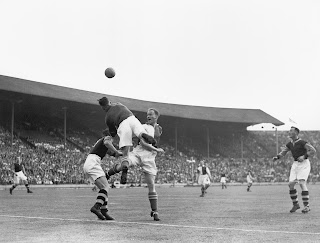
1940 war cup final
1940 War Cup Final at Wembley won by 1-0

On 1 September 1939, Germany invaded Poland. The following day, there was a full English league programme. A day later the United Kingdom declared war on Germany, large public gatherings were suspended and the season abandoned. Yet within two months, regional leagues had been established. Arsenal, for instance, hammered Sunderland 5-2 on 2 September and then beat Charlton 8-4 in their inaugural southern league fixture on 21 October. It is difficult to be sure of attendances, but in excess of 10,000 turned up for both their games against West Ham.

The War Cup final on 8 June 1940 – which kicked off at 6.30pm despite fears of bombing raids – drew 42,300 to Wembley, the restrictions on public gatherings long since lifted. The remarkable aspect of football in the second world war is how much of it there was. In Germany, they kept playing until the end of April 1945. In France, war champions were declared each year, although the 1943-44 season was incomplete. The Netherlands missed only one season, Italy two.

Hungary was invaded twice, first by the Germans and then by the Soviets, and yet football never stopped. At times the juxtaposition of detail becomes absurd. On 6 December 1944, with Nazi-occupied Budapest under bombardment from the Red Army, the Ujpest coach, Geza Kertesz, who was working with a resistance group that had been supplying details on troop movements to the United States, took a training session then held a press conference previewing the upcoming derby against Ferencvaros. That evening he was arrested by local fascists and handed over to the Gestapo; two months later he was executed as the Germans prepared to retreat.
This is among the top-flight players to express concerns about a restart
 This is among the top-flight
players to express concerns about a restart

Which tell us what, exactly? First, that football is resilient.  It adapts to circumstance and carries upon, whether that means rejigging competitions and regulations, guest players or limited crowds. Second, and perhaps more pertinently, there has always been a demand for it, from both authorities and fans.

After the German invasion of Ukraine, a league was quickly established as part of a process of “normalisation” – which is what led ultimately to the “death match” between Start, a bakery side that featured a number of former Dynamo Kyiv players, and a team representing the Luftwaffe. The logic that encouraged the Hungarian authorities to keep football going is the same that led the British government to waive the restrictions on crowds so people could still gather to watch football. And that is the impact football has on morale.

This is not something to be treated glibly – and there is an obvious difference with wartime in the risk of the virus being transmitted by the act of playing. Danny Rose is right to fear players being forced back prematurely. But just because Dominic Raab says something doesn’t necessarily make it superficial nonsense; it can also be glib for amateur virologists to dismiss out of hand the attempt to create a safe environment for football.
Football has always adapted to hard times. Its return might help us feel less alone
There was much discussion of a poll last week that suggested 73% of people did not anticipate their morale being lifted by the return of football. But 19% did, which seemed even more remarkable: one in five people – 13 million Britons – think they will be happier with football to watch and, perhaps more important, discuss.

It may be that any football that is played ends up being tepid, that the sense of artificiality is overpowering, the absence of fans a huge turn-off. Once Liverpool have sealed their Premier League title, how engaging will the battle against relegation or for qualification to the Champions League be, particularly when it’s far from clear if or in what form next season’s Champions League will take place? On the other hand, the FA Cup may find itself reinvigorated.

And, of course, the how is hugely complex. But if the infection rate falls, if the resources are available and if a safe environment can be created, then why would football not be considering a resumption? Every other industry is assessing how to restart as lockdown begins to ease: why not football?

Newcastle’s Danny Rose (left) is among the top-flight players to express concerns about a restart. Photograph: James Marsh/BPI/Shutterstock
meet diego forlan an accidental footballer for whom success was slow in coming
The Bundesliga’s return is a huge test. Borussia Dortmund’s managing director, Carsten Cramer, has said the protocols to protect players went far beyond the safety measures in most other industries. There’s no reason for the Premier League not to match those standards. But Cramer also noted that, on top of the human cost, “if we fail, the problems afterwards [for football] will be even bigger than before”.

Football was right to stop when it did but it’s right for it to consider when and how it may return. Judging precisely when the risk has been sufficiently minimized is clearly enormously difficult, there is every reason for extreme caution, and players need to be fully involved in the process, but that doesn’t mean the assessment should be shirked. If the necessary threshold of safety can be achieved, the palliative effect of resumption is potentially huge. This is not just about the game or money.

CS Lewis observed that literature exists to remind us we are not alone. Football fulfills a similar function. It is the currency in which a vast amount of social interaction is conducted. Governments recognized that in times of crisis throughout the 20th century but football has never been bigger than it is now. After weeks of isolation, there has perhaps never been a time when it has been more important to remember we are not alone.  Football can be an detestable, self-eager, greedy game at epoch but it can, perhaps, mitigation in front that.

Bundesliga Team of the Decade

With Bayern Munich and Borussia Dortmund sharing each of the last 10 Bundesliga titles, it's no surprise that the Klassiker rivals dominate our Team of the Decade...

Manuel Neuer
Manuel Neuer (Bayern Munich)
Goalkeeper
Not only would Neuer be the number one choice for the past decade, but the innovative sweeper-keeper would arguably figure in any decade in footballing history, and in any country. Such has been Germany's undisputed No.1's impact on the game, first at Schalke and then with Bayern and Germany, he continues to be regarded as one of the best goalkeepers the game has ever produced, and justifiably so. His safe hands not only keep out shots week in, week out, they have also lifted seven Bundesliga titles, five DFB Cups and the UEFA Champions League. With his feet, positioning and mind, Neuer has transformed the role of the goalkeeper and inspired a new generation.

Philipp Lahm
Philipp Lahm (Bayern Munich)
Right-back
The first man to lift the Bundesliga, DFB Cup and UEFA Champions League all in the same season, Lahm then became only the fourth German to raise the FIFA World Cup into the air. Germany's Footballer of the Year in 2017 – the year he retired – Lahm was named in UEFA's Team of the Year five times and boasted a haul of eight Bundesliga titles. Going down as one of the best full-backs ever, his versatility saw him switch from the right to the left of defence and later into a holding midfield role during the 2010's. Lahm impressed so much there that the praise he received for his expert full-back performances was soon replicated, with questions asked as to whether he may also be one of the best midfielders the world has ever seen.
Centre-back

Jerome Boateng
Jerome Boateng (Bayern Munich)
Centre-back
Another FIFA World Cup and UEFA Champions League winner, Boateng has been the rock at the heart of the Bayern defence for the best part of the past decade. Like Neuer, the Berlin-born defender redefined his role. Not only does Boateng excel at his defensive duties, he also has an eye for a game-opening pass – and both the skill and composure to execute it. Deadly in the opponents' penalty area too, the former Hertha Berlin and Hamburg centre-back is a feared player at both ends of the field, equally adept in stopping and scoring goals. There are not many defenders who can boast being named Germany's Player of the Year, as Boateng was in 2016.

Mats Hummels
Mats Hummels (Borussia Dortmund/Bayern Munich)
Centre-back
One of Boateng's best central defensive partners was Hummels, who returned to Dortmund last summer after winning three more Bundesliga titles with Bayern. Hummels got the first two of his five league medals with Dortmund, where he was the bedrock upon which Jürgen Klopp built his back-to-back title-winning team. The man who earned 70 caps for Germany shares Boateng's excellent game awareness, which is why they both combined to such deadly effect for Bayern. His reading of the game often ensures he is in the right place at the right time to make that telling tackle, ending an opponents' attack before launching one for his own team with his outstanding passing ability, even with the outside of his foot as he so often demonstrates.

David Alaba
David Alaba (Bayern Munich)
Left-back
When you are billed as "one of the best players on his side of the field" by Franck Ribery, you must be doing something right. Thanks to Ribery's mentoring in Munich, Austrian full-back Alaba could still become the most successful player in Bundesliga history. He already has eight Bundesliga titles in the cabinet, along with five DFB Cups and the UEFA Champions League. They sit proudly next to the two trophies he earned as Austria's Sportsman of the Year – an individual accolade that had been last won by a footballer, Toni Polster, in 1997. Rarely has a defender looked as comfortable on the ball as Alaba does, with his bursts of pace and close control making him a threat going forward and more than just an annoyance for opposition wingers. His set-pieces are second to none, and he is a regular goalscorer from direct free-kicks.

Javi Martinez
Javi Martinez (Bayern Munich)
Defensive Midfielder
One of the reasons Bayern won seven straight Bundesliga titles was because they had Javi Martinez in their team. Don't believe us? Well, when he reached 100 Bundesliga appearances in 2018, the Spaniard had a remarkable ratio of 85 wins. That's right – he was not part of a winning side only 15 times in his first century of games in Germany's top flight. That record only slightly substantiates why the versatile defensive midfielder features as the best in his role over the past decade. Last season, when Bayern faced their fiercest challenge yet for the title, the record champions struggled so much when Martinez was sidelined. They lost three and drew two of the 10 games he sat out, averaging just 1.7 points per match. When the former Athletic Bilbao stalwart did play, that average rocketed to 2.7 points. "The way he goes into tackles and wins aerial battles - he's a real weapon," said former Bayern president Uli Hoeneß. Indeed, Martinez is a destructive defensive midfielder...

Arjen Robben
Arjen Robben (Bayern Munich)
Right winger
Fans of Bayern and the Bundesliga alike were sad to see Robben bring the curtain down on his playing career in the summer of 2019. Only opposition full-backs will have breathed a sigh of relief to see one of their greatest tormentors hang up his boots, including that enigmatic left one which almost defied logic in its habitual ability to curl goals into the far corner. Robben ended his career just one goal shy of a century for Bayern, having spent a decade terrorising defenders and picking up trophy after trophy. It was the Dutchman's goal which earned Bayern victory in the 2013 UEFA Champions League final against Dortmund, and many of his others contributed to him winning a total of eight Bundesliga titles. That added to two domestic league titles in England, one in the Netherlands and one in Spain.

Thomas Müller
Thomas Müller (Bayern Munich)
Attacking Midfielder
Since he took his professional bow for Bayern in 2009, little has gotten in the way of Müller's inexorable rise to the top of the world game. A World Cup winner with Germany – and with more World Cup goals than Diego Maradona – the 30-year-old is also the most prolific German goalscorer in the UEFA Champions League. An integral part of Bayern's treble-winning side in 2012/13, Müller is another of those players to have redefined his role. Nobody, however, has yet been able to copy his unorthodox 'Raumdeuter' or 'space invader' style. Lurking behind the forwards but always finding the gaps at the right time to score, he has netted almost 200 times for Bayern.
Marco Reus
Marco Reus (Borussia Dortmund)
Attacking Midfielder
When Mario Götze struck the winning goal for Germany in the 2014 World Cup final, his thought went to one man – Reus. An ankle injury had cruelly denied the Dortmund attacker his place on that World Cup-winning squad on the eve of their departure for Brazil, but there is no doubt he would also have been a worthy champion. Indeed, recurrent injuries have denied fans the chance to see more of one of the most naturally talented players Germany has ever produced. With sublime skills, control and the sweetest of strikes of the ball, you just have to look at the seasons when injury did not get in the way to discover Reus's full potential: 16 goals and 14 assists in 2013/14, 17 and 11 last season and 18 goals plus 12 assists in his final season with Gladbach before moving to Dortmund in 2012.

Franck Ribery
Franck Ribery (Bayern Munich)
Left winger
When Ribery arrived in Munich from Marseille in 2007, he had some mighty large boots to fill. Mehmet Scholl was bringing his career to a close and the Frenchman was his designated successor. What Ribery did was take Scholl's eight Bundesliga titles, five DFB Cups and one Champions League and raised him one league and one cup title, becoming the Bundesliga's most successful player in history. In 273 German top-flight outings, Ribery scored 86 goals and set up a further 120, making him one of the best Bundesliga players of the second decade of the new millennium. The former France international had full-backs writhing in agony as he twisted and turned them in all directions, galloping forth on his way to goals and assists aplenty.

Robert Lewandowski
Robert Lewandowski (Borussia Dortmund/Bayern Munich)
Striker
What is there still to be said about a man who – in the absence of Lionel Messi and Cristiano Ronaldo – would worthily be rejoiced as the world's best player of the past decade? Lewandowski is not just the man who scored the quickest five goals in a single Bundesliga game, the fastest four in a Champions League fixture, and the Bundesliga's most prolific foreign goalscorer. No, that is not even the half of it. The Pole has sent records tumbling on his way to seven Bundesliga titles, four top-scorer gongs and seven Bundesliga Player of the Year awards out of a possible nine since 2011. Now up to third in the Bundesliga's all-time top-scorer chart, the 47 goals distancing him from second placed Klaus Fischer are likely to be gobbled up in record time.